Centralized store creation for merchants + developers
Streamlining store creation surfaces and store types across Shopify
Background
Shopify had 3 separate surfaces for store creation, and the more specialized the job-to-be-done, the more fragmented the experience. Entry points also varied by plan, and an excess of store types — many without a clear purpose — added cognitive load rather than clarity.
As design manager, I led the effort to centralize store creation into a single, reliable entry point for merchants and developers alike. Along the way, I coached 3 designers and convinced 4 teams to incorporate changes into their roadmaps. The result gave users a consistent place to expand their business and gave internal teams a shared mental model of the account layer.
01 Strategy
Surface needs, light the way, rally teams
02 Design decisions
One dynamic destination, many ways to get there
03 Impact
Anchored merchant growth in the account layer
Outcomes
3 → 1
Reduction in # of store creation surfaces
6 → 2
Reduction in # of store types
2 roadmaps
+ 4 teams influenced without formal authority
01 Strategy
Surface needs, light the path, rally teams
I uncovered hidden team needs.
All teams agreed with streamlining in theory, but I spoke to stakeholders to dig into the reasons behind their aversion to change. The developer dashboard team feared a degraded experience, and the growth team worried about conversion drop-off.
I made the solution concrete.
I created a simple flow showing multiple entry points leading to the same place. Seeing a dynamic store creation form that wouldn’t overwhelm users made it easier for teams to rally around the centralized direction.
I turned alignment into action.
Because my team didn’t own all entry points, I carefully framed the vision in accordance with each team’s goals and circulated the concept widely. That’s what helped it get prioritized across roadmaps.
02 Design decisions
One dynamic destination, many ways to get there
Support multiple entry points, unify the destination. Not every user needed to start in the same place to achieve their goal. We allowed varied entry points but routed all users to a single dynamic form.
Challenge legacy complexity. Over time, Shopify had amassed 6 store types, many of which were tracked for unknown reasons. One of the designers on my team dug deeper and advocated for just 2 store types, using smart defaults and progressive fields to tailor setup.
Balance speed for beginners with power for experts.
We kept setup easy for merchants just starting out and provided advanced options for developers and partners in the account layer.
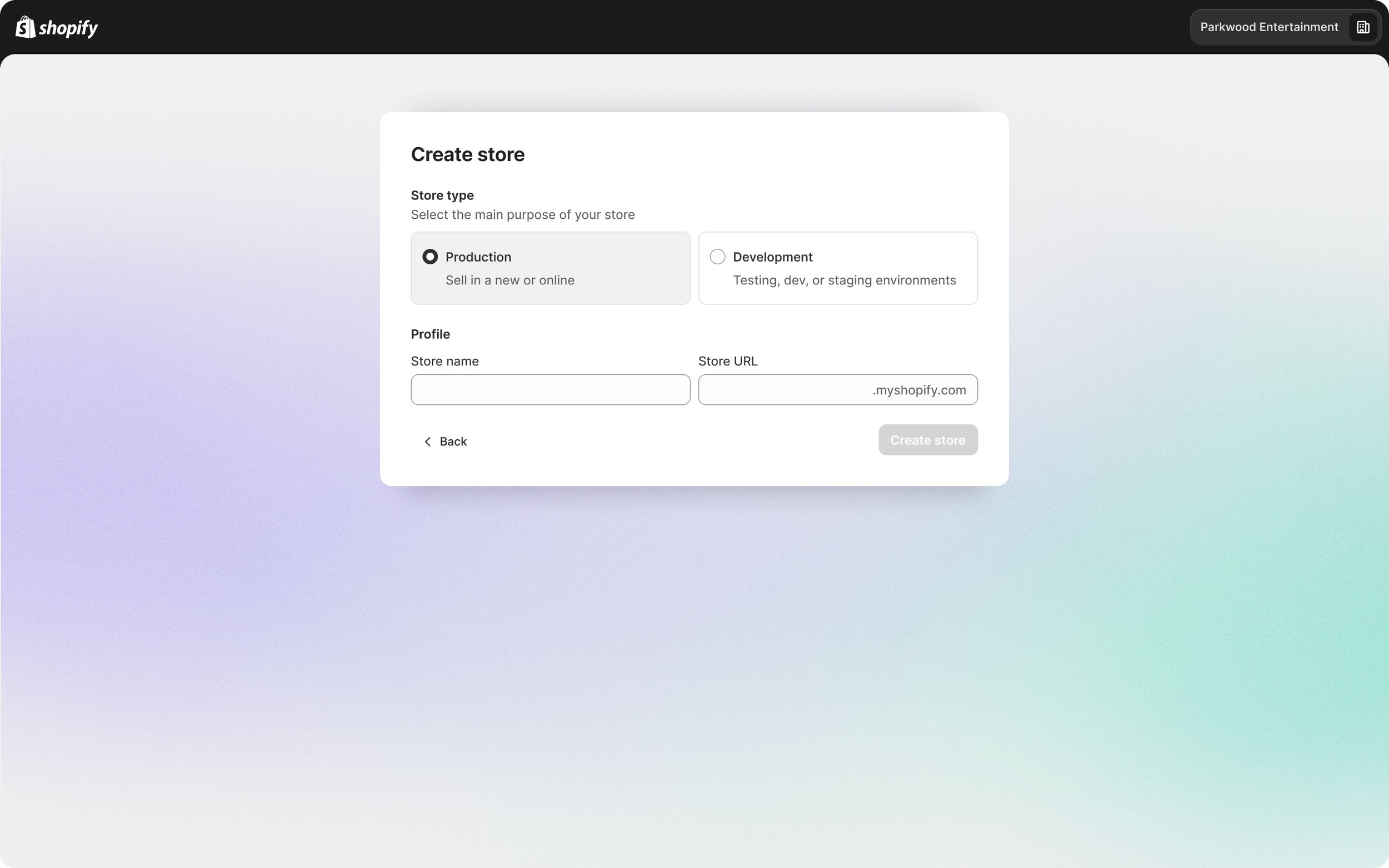
👆 Click thumbnail to view prototype
03 Impact
Anchoring merchant growth in the account layer
This work made store creation more cohesive and efficient for merchants and developers. It also unlocked momentum across teams and surfaces by establishing shared direction early. Most importantly, it reframed the neglected account layer as the anchor of the Shopify ecosystem, not just as an access point for stores, but as the place to manage and expand them.